Showing posts with label Independent Component. Show all posts

Friday, April 24, 2015

Blog 19: Independent Component 2

Literal
  • I, Claire Dix, affirm that I completed my independent component, which represents 47 hours and 15 minutes of work.
  • The printed source I used to help me complete my independent component was Integrated Chinese Textbook Level 1. My other sources were my friend, Ching Chow and the city of Ensenada, Mexico.
My Chinese textbook, which I
worked through a bit with Ching
Ching and me

The border 
  • My senior project hours log has been updated.
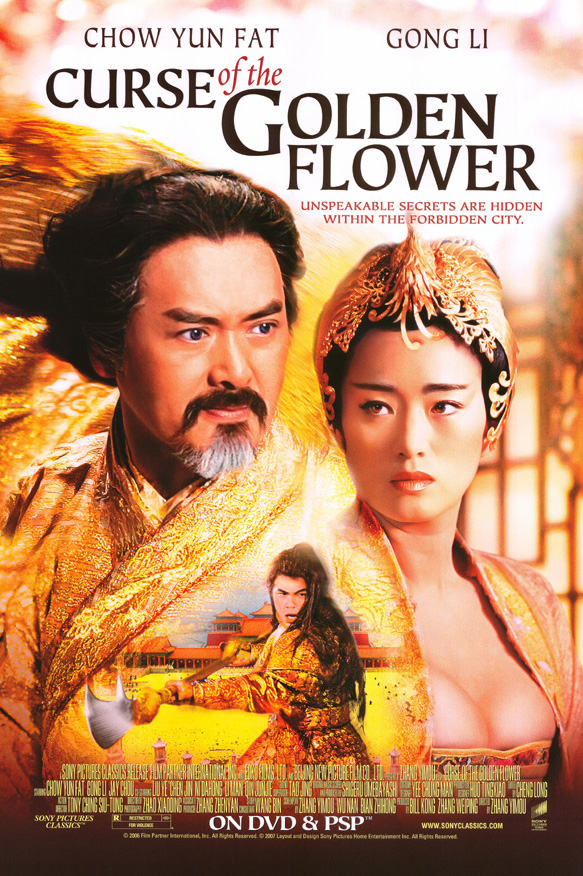
  • My independent component had two main aspects. The first was continuing to learn Spanish and Mandarin by focusing on speaking. I did this by meeting with my Chinese friend Ching. We conversed in Chinese and she helped me with pronunciation and learning vocabulary, as well as useful grammar concepts in Chinese. On the Spanish side, I went to an orphanage in Mexico for a weekend and spoke a ton of Spanish there. The second aspect was gaining more knowledge about the culture of the people who speak languages. I did this by watching two movies in Chinese, talking to Ching and going to a Chinese bakery with her, and going to Mexico.
Interpretive
        I specifically honed in on two critical skills that are required for an interpreter to best ensure understanding between people: Fluency/linguistic ability, and cultural knowledge of the languages in use. To do this, I was intentional about practicing speaking Chinese and Spanish with my friend and in Mexico. Through talking to Ching, watching the movies, eating Chinese food, trying to read every Chinese character I saw, and being in Mexico, I gained more cultural knowledge that I can build upon as I learn and study more. This was significant to my project because I was able to go in depth on these two EQ answers and continue to prepare for becoming an interpreter myself as well. I'm not fluent yet, but the time and practice I put in during my component was helpful. It's pretty hard to fully learn a language and a culture without living in the country, so I hope to do that in college. The bulk of my hours came from my weekend trip to Mexico, and the rest were from meeting with Ching and watching the Chinese films, which were about two hours each. The principle things I achieved through this component were intangible, but here are some visuals describing what I did for my hours.


These are the Chinese films I watched


Went to 85 degrees and tried to decipher
the Chinese characters labeling the food.

Here is a link to another blog post, where I wrote in detail about my Mexico trip. And here are more pictures of my time that I did not include in the other post. I was taking most of the pictures for the group so I'm not in very many of them.


Applied
        My essential question is how can an interpreter best ensure understanding between people who do not speak the same language? I focused my independent component on my first and second EQ answers, which are achieving a high level of fluency in the languages and possessing an in depth knowledge of the culture of the languages, respectively. What I did helped me answer my EQ in that it gave me more support for my answers and allowed me to actually put them into practice myself. I improved in speaking both Chinese and Spanish, which I was very happy about. It makes me so excited to get better. Especially when I was in Mexico, I realized I was farther ahead than I thought in  how much Spanish I was able to understand and respond to. I really gained a lot of confidence from it that I had lacked before.
        The other aspect of my component, cultural study, also helped me answer my EQ because I was actively researching and learning about the cultures of both my languages, which, some experts say, is at the core of being a qualified and competent interpreter. By actually going to a country where Spanish is the dominant language, I was able to see how the people lived and get actual immersion experience. The Chinese movies that I watched were rich in Chinese culture, and I could hear the language at the same time. It was awesome that I was able to understand some of the Chinese spoken in the movie! Even if I didn't look at the English subtitles! (Sometimes).

Monday, March 30, 2015

Mi Viaje a México (My Trip to Mexico)

        As part of my independent component, I went to Mexico for two days with a group from my church. We were at an orphanage in Ensenada hanging out with the kids. We also made them food and taught them how to clean their kitchen. The trip fit perfectly with my component because I got to speak a lot of Spanish and experience the culture of Mexico as well. The majority of the people on the trip spoke Spanish, and I was proud of myself for being able to understand most of what they said to each other and for being able to respond to them. None of the kids at the orphanage spoke any English, so I got to talk to them too. And I even interpreted for my brother and a non-spanish speaking friend! That was one of my favorite parts of the trip. I felt like I was actually able to experience for a tiny second what interpreting is like. A significant portion of the cultural aspect came in the form of the food we ate. I have Mexican food all the time but it was really cool to eat a taco in the actual birthplace of tacos. I also found crossing the border quite fascinating. It was the first time in my memory that I have crossed an international border by car (usually I'm in a plane). Going into Mexico, there was no line and they didn't check at all for any kind of identification from anyone. Some random cars were searched, but that was it. However on the way back, we sat in a two-hour line to get to the window at the border (there were 26 open windows and it was still taking forever), where each of our passports, or birth certificates in the case of my brother and me, were looked over and verified with their respective owners. Then we were asked 20 questions about why we were in Mexico, where we were going, what we were bringing back, etc. No wonder the line had moved so slowly. I'm so glad I was able to go and get my IC Spanish hours finished up but also bring smiles to the kids' faces in the process. Unfortunately I was only able to get pictures at the actual orphanage and none of the city of Ensenada.
The kids loved soccer
This the main gathering area at the orphanage
Not a good picture of me, but it proves I was there!
I was the group photographer, which explains the lack of pictures with me in them
They had a little playground
Here are some team members making lunch for the kids
Craft time

Tuesday, February 10, 2015

Blog 15: Independent Component 2 Approval

1. Describe in detail what you plan to do for 30 hours.
        My 30 hours will consist of meeting separately with two people I know, one who is fluent in Spanish and one who is fluent in Chinese. These meetings will basically consist of hanging out and conversing in each person's respective mother tongue. In addition to practicing the language, I will also be able to get some insight on the culture of each person's native country and how their language relates to it.

2. Discuss how or what you will do to meet the expectation of showing 30 hours of evidence.
        To show evidence for my component, I will take pictures with the two people I meet with and any activities I do with them. I will also type up something for each person to sign verifying the number of hours I spent talking with them.

3. Explain how this component will help you explore your topic more in depth. 
        There are two main was that my independent component will help me explore interpretation more in depth. The first is that through practicing speaking Chinese and Spanish I will gain a better perspective on my first EQ answer, which is regarding language fluency. Since one must be fluent in a second language in order to becoming an interpreter, I feel that learning and practicing with native speakers I am acquainted with will be very beneficial to me both in my project and in general. The second way my component will deepen my exploration of my project is that by spending time talking with people who are actually from and have lived in Chinese and Spanish-speaking countries, I will be able to learn about the culture behind the two languages. This relates to what I am planning for my second EQ answer, which is that interpreters must have a thorough knowledge of the culture of both languages in order to best ensure understanding.

4. Update your senior project hours log.
        Done.

Friday, February 6, 2015

Blog 14: Independent Component 1

Literal
  • I, Claire Dix, affirm that I completed my independent component, which represents 80 hours and 30 minutes of work.
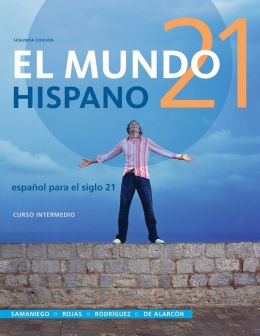
  • The sources I used to help me complete my independent component were, Integrated Chinese Textbook Level 1, Integrated Chinese Workbook Level 1, and El Mundo 21 Hispano. 


  • My senior project hours log has been updated.
  • For my independent component, I took two college level language courses, Spanish for Spanish  Speakers II (Spanish 250) at Cal Poly Pomona, and Beginning Chinese (Chinese 101) at Citrus College. I recorded hours for both classes from the time my component was approved in October to when they ended in December.
Interpretive
        For obvious reasons, it is simply not possible to be an interpreter without having being able to speak more than one language. Taking these classes was significant to my project because knowing a language other than one's mother tongue is basically what both my project and career hinge on. In addition to this, taking these courses tied into my first EQ answer, which is regarding fluency in both languages involved in the interpreting happening at the time. Knowing not only the grammar, but also the cultural aspects of a language is essential to interpreting, and both classes integrated their respective language's culture into the class. I felt that they both started me on a strong path to fully acquiring Spanish and Chinese in the future. So even though my independent component was not about interpretation itself, it did deal with a directly related, critical element of it.
        I only recorded in my IC1 log the hours that I was physically sitting in class, which totaled 80.5 hours. I received a B grade in both classes, however I believe this is in no way evidence that I did not go above and beyond the 30 necessary hours as recorded in my log nor that I did not put my best effort into either class. I missed one Chinese class and no Spanish classes. Just being in class and participating got me the number of hours I needed to complete the requirement for this component; I didn't even count additional time for homework, projects, and studying, although that alone would probably have added up to over 30 hours as well.
        Here is a link to my Cal Poly Spanish Transcript. Here is a link to my Citrus College Chinese Transcript.

Spanish Work

I took notes every day off of what the professor wrote on the board

Here are some typical Spanish homework assignments -
writing a paragraph about a class discussion topic.
This is the first page of my Spanish midterm.
My score is at the top. Part of it was writing a composition
on the themes of a movie we watched in class. Mine is on
the right.


Chinese Work Unfortunately, my Chinese professor did not allow us to keep any tests or quizzes.

We did these character worksheets at the
beginning of each new lesson

This a Chinese crossword we did as a class with t
he vocab we were learning at the time.

Chinese homework came out of the
workbook. There was a lot of reading, writing,
 and answering questions. On the right page I had to
read the Chinese paragraph and answer the
comprehension questions.


This is my group's final Chinese project, a video about the 
green onion pancake, a popular dish in China. 
Applied
        Through my independent component, I learned how difficult it is to learn a new language even to the point where one is able to have a decent conversation with another person. This was especially evident to me in considering my Chinese class. Unlike Spanish, where I am at an intermediate level, I went into the first day of Chinese knowing how to say literally three words and absolutely nothing about how to read it, write it, or how anyone made sense of the random sounds I heard when I heard someone speak it. It was only through extremely hard work and self motivation that I was able to comprehend or speak anything. At the end of the class I was very excited at my progress. Learning Chinese is one of the most enthralling and exhilarating things I have done in my life. That being said, the process of learning it was HARD. Very hard. I was lost and frustrated at several points in the process of both classes, which is probably why I ended up with Bs. However this gave me a greater realization of how much interpreters are needed. As I have concluded previously in my presentations and interviews, the purpose of interpreting is understanding between people. Through the classes I took, I saw that learning any new language, especially one like Mandarin, is most definitely not for everyone. But that's why interpreters work (and I worked, in my classes) so hard at it. It's so that one person can comprehend what another person is trying to convey to them without having to spend a decade studying characters and tones. Because even though I love it, I know not everyone does.

Sunday, November 30, 2014

Little Chinese Lesson! (小中文教训)

        This semester I have been taking a beginning Chinese class at Citrus College. Mandarin is one of the language I want to focus on as an interpreter, so this class has been very important to my project.
        If you are anything like me, then you have probably heard Chinese being spoken at some point in your life or have seen it written somewhere and said to yourself, "How in the world do people speak and understand this?!" Well lucky for you, this post will shed some light on the mystery that is the Chinese language.
        The first thing you have to know is that Chinese is a tonal language, which means that the way a word is accented affects its meaning. There are four tones in Mandarin Chinese. Almost every Chinese word is said with one or more of the four tones. (I say almost every word because some have no tone at all). This is a picture of how you say each of the four tones.


And here is a video of what each tone sounds like! You can hear how each tone matches the above picture and how each tone mark corresponds to the sound. The official way to write Chinese with Arabic letters is called Pinyin, which is what is used in the video. That is why there are English letters instead of characters.


        These is no such thing as "tense" in Chinese like there is in English and other languages. Instead, a specific time is usually specified, and the verb does not change form. Word order is pretty simple: Subject+Time+Verb+Object. So "I will watch a movie this weekend" is "Wǒ(I) zhè(this) zhōumò(weekend) kàn(watch) diànyǐng(movie)∘" In characters, this sentence is 我这周末看电影。Chinese also does not have any articles  such as "a", "an", or "the". An interesting (and difficult) thing about Chinese is that if you have not memorized what word matches with what character, there is no way to read the sentence. You cannot "sound out" words like English and know what they mean. For me this has been the hardest part of learning Chinese - character memorization. 
        
        Well that's all for this mini Chinese lesson! To quote my Chinese professor, "See! Chinese is easy!"

Wednesday, October 1, 2014

Blog 7: Independent Component 1 Approval

1. Describe in detail what you plan to do for 30 hours.
        My 30 hours will come from a combination of both my Spanish and Chinese classes. I attend Chinese for five hours per week and Spanish for four hours per week. This is a total of nine hours per week, and, assuming my component gets approved and I continue logging hours until both classes end in December, I will have a total of approximately 180 hours. This time will be spent participating in class, completing assignments such as presentations, classwork, projects, and tests, and interacting with my professors and other students in the classes.
        In my Chinese class, which is at Citrus College, we practice speaking in Chinese through little dialogues from the textbook or short presentations using the vocabulary in the lesson. We also practice character reading, writing, recognition, and translation. Sometimes we play a game or do an activity to get more familiar with the characters and grammar concepts we are learning that week. There is usually a quiz once every two weeks or so. I can't believe how much Chinese I have learned in these past six weeks of being in the class.
        I am taking Spanish at Cal Poly Pomona. Since I have only attended one class so far, I'm not sure yet what specifically I will be doing in there. However, the entire class is taught in Spanish (technically it's a class for native Spanish speakers), so I have no doubt that my Spanish will be greatly improved by my attending the class.

2. Discuss how or what you will do to meet the expectation of showing 30 hours of evidence.
        To show at least 30 hours of evidence, I will save all assignments, homework, projects, etc. that I complete for each class and select pictures of some of them to put on my blog. I will also post a video of any oral presentations I do for either class and pictures of the classes themselves. I will have a total of 10 weeks worth of work to show for both classes, so I should have enough tangible evidence, of which I can post digital copies, to add up to 30 hours. Also, I will have made progress in my ability to speak, read, and write in Spanish and Chinese outside of the classroom. This is something I won't really be able to post on my blog, but I can show it in person.

3. Explain how what you will be doing will help you explore your topic more in depth.
        My independent component really is laying a foundation for my entire project and topic in general. It is impossible to become an interpreter without fluency in at least two languages. So, since my success as an interpreter hinges on me achieving fluency in the languages I have chosen to focus on, taking these classes is very important to my topic and the further development of my project. Even though my independent component will not deal with interpretation expressly, it will ultimately allow me to go deeper into the topic as I (hopefully soon!) start a mentorship in interpretation and continue to pursue it as my career.

4. Update your senior project hours log.
        Done. :D